Wooden Wick Candle Goes Out: What Causes It and What Helps
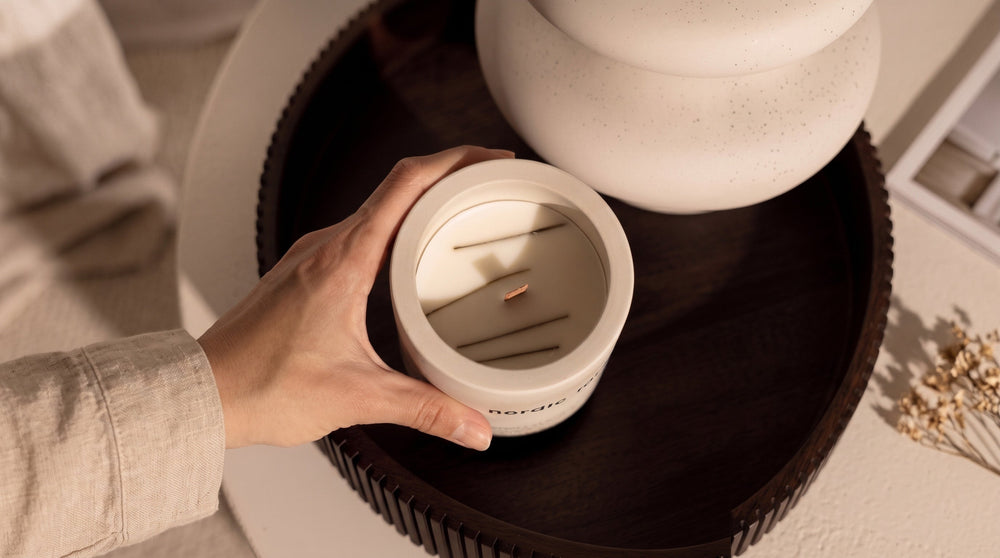
If a wood wick candle goes out after just a few minutes, the wick is almost always too long. A wood wick needs a short, wide flame—if it is longer than five millimeters, not enough wax is drawn up, and the flame suffocates itself. Trim the wick to three to five millimeters, light it at the edge rather than on top, and let it burn the first time until the wax is melted all the way to the edge of the glass.
That is three simple steps. The rest of this text explains why they work—and what you can do if it still doesn’t work.
Why a wood wick burns differently than a cotton wick
A cotton wick draws up wax like a wick in an oil lamp. It pulls liquid wax up through the fibers and burns it at the tip. This makes the flame tall and narrow.
Wood does not draw. A wood wick burns the wax that adheres to its surface—broadly rather than at a single point. Everything else follows from this: the flame is lower and wider, it needs more oxygen from the side, and it reacts more sensitively to a wick that is too long than any cotton wick.
The crackling comes from the same mechanism. Wood contains residual moisture and resins. When it burns, they pop—that is the sound that reminds you of a fireplace.
Cause 1: The wick is too long
This is the most common case. A charred wick edge that remains standing acts like a lid: the wax can no longer reach the flame, the flame gets smaller, and eventually it goes out.
How to trim it properly: Wait until the candle has cooled down completely. Break off the charred layer with your fingers or cut it off straight with scissors. Three to five millimeters of visible wick are enough. Do this before every lighting, not just the first time.
If you leave the wick longer, you won’t get more flame, but soot on the glass.
Cause 2: Lit incorrectly
A wood wick takes longer than a cotton wick to burn steadily. Hold the flame to the edge of the wick, not on top, for about ten to twenty seconds. The wick must begin to glow at the edge before you remove the lighter.
If it still goes out, light it a second time in the same place. This is not a defect in the candle, but normal behavior in the first few seconds.
Cause 3: The wick is drowning in wax
If the flame is in a deep pool of wax, it no longer gets oxygen. This happens if the candle was in a draft and burned unevenly, or if it burned for too long at a time.
What helps: Blow out the candle, let it cool down briefly, and wipe away the excess liquid wax with a kitchen towel until the wick is free again. Only then relight it.
What does not help: Exposing the wick more deeply by breaking out the wax around it. This creates a hollow where wax will collect again during the next burn.
The first lighting determines the entire burn time
Wax has a memory. During the first burn, a pool of wax forms—and that is exactly up to this diameter that the candle melts down every subsequent time. If the pool remains small the first time, the candle will permanently burn a tunnel into the center and leave a wax rim that never disappears again.
The rule for this is simple: During the first lighting, let it burn until the wax is melted all the way to the edge of the glass. For a vessel with a diameter of eight centimeters, this takes around two hours. So plan the first burn time consciously and do not light the candle for twenty minutes in between.
After that, the opposite applies: no more than about four hours at a time. Any longer makes the glass hot and the wax so liquid that the wick drowns.
If it does not crackle
No crackling usually means: The wick is not yet fully warmed up. Give it two to three minutes. If it remains quiet, the wick is either cut too short or lies too deep in the wax—both can be remedied with the points above.
You still have to be honest here: A wood wick crackles more quietly than most expect. It is a fine crackling in a quiet room, not a fireplace. Anyone looking for a loud crackling will be disappointed by any wood wick candle.
How to recognize a good wood wick candle
Three things decide, and none of them can be seen in the product photo.
The wax. Plant-based waxes burn at a lower temperature than paraffin. This is a better match for the wood wick, because the flame is already lower.
The ratio of wick width to vessel diameter. If the wick is too narrow for the glass, the tunnel will form even if you do everything right.
The vessel. Thick-walled glass distributes the heat more evenly and prevents one side from burning out faster than the other.
Our scented candle with crackling wood wick is in a brown glass with a diameter of eight centimeters and a height of 8.5 centimeters, contains 240 grams of wax, and burns for around 30 hours. It is handcrafted in a small family business in Germany, and it is available in Nordic Forest and Creamy Vanilla. Once the wax is used up, the glass can be washed out and reused—as a small vase or as a container. Why we generally opt for glass instead of plastic is explained in our post about glass bottles and sustainability.
By now, over 450,000 people use our products daily.
In short
Trim the wick to three to five millimeters before every lighting. Light it at the edge and hold it for ten to twenty seconds. The first time, let it burn until the wax reaches the edge—for a diameter of eight centimeters, that is around two hours. After that, no longer than about four hours at a time. No drafts.
You can find more about natural materials in the home in our post about natural materials for your sustainable home. And if the candle is part of a firm evening ritual for you, our text about more mindfulness in everyday life is a good match.
Frequently Asked Questions
How short does a wood wick need to be? Three to five millimeters. Shorter, and the flame suffocates in the wax; longer, and not enough wax is drawn up—the case from Cause 1.
Why does my wood wick candle keep going out? In most cases, because of a wick that is too long or charred. Check in this order: wick length, lighting technique, pool of wax.
How long should a wood wick candle burn the first time? Until the wax is melted all the way to the edge of the glass. For a diameter of eight centimeters, that is around two hours.
Why does my wood wick not crackle? Usually, it is not yet fully warmed up—wait two to three minutes. Otherwise, it is cut too short or lies too deep in the wax.
Is a wood wick less sooty than a cotton wick? Yes, if the wick length is correct, because the flame burns more quietly. A wood wick that is too long, on the other hand, leaves clearly visible soot on the edge of the glass.
Can I reuse the glass after it has burned down? Yes. Dissolve the wax residues with hot water, wash out the glass, and you are done.
More Home Stories
Soap dispenser no longer pumps: What can be repaired – and what cannot

Shampoo and shower gel dispensers in the shower: what matters when it comes to the pump, holder, and size

Cleaning countertops: What is allowed on which material

Washing kitchen towels: 60 degrees, no fabric softener – and why that’s enough

How to Remove Fish, Onion & Garlic Smells from Your Hands — What Really Works

Silicone or stone drying mat: What really dries beside the sink

Clean stainless steel without scratches and streaks