Washing kitchen towels: 60 degrees, no fabric softener – and why that’s enough
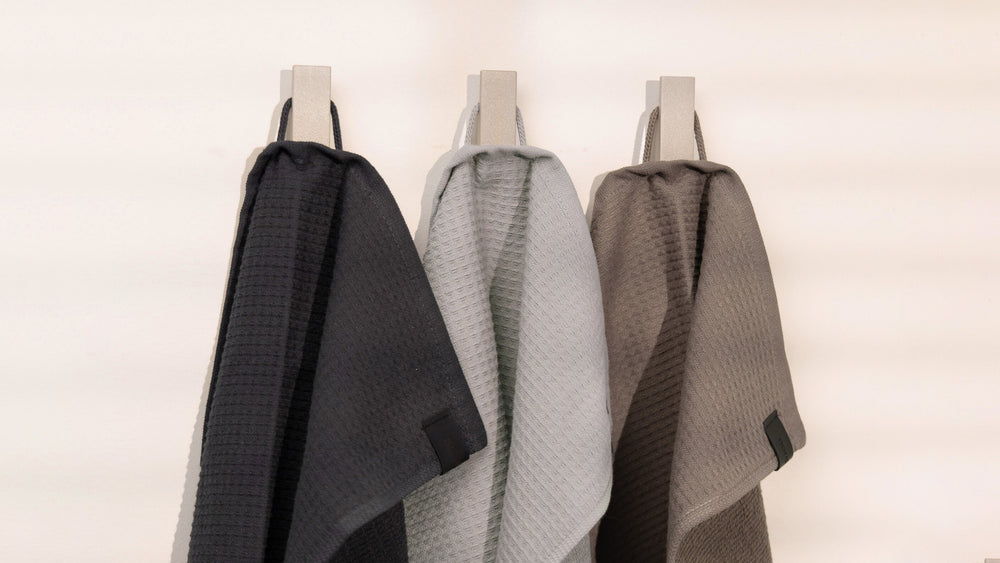
You wash cotton kitchen towels at 60 °C on a normal cotton cycle, with regular detergent and no fabric softener. That’s the short answer. Fabric softener is where most people make things difficult for themselves: it coats the fibers in a fine layer of grease—and that’s exactly what robs the towel of the absorbency you bought it for.
Everything else is detail. Here it is, sorted by the questions people actually ask.
What temperature should you wash kitchen towels at?
60 °C. That’s the standard for kitchen textiles and the temperature good cotton towels can withstand. Our nordesign kitchen towels are washable at up to 60 °C and dryer-safe—that’s what the care label says, and you can trust it.
30 or 40 °C is enough for a towel that has only polished glasses. As soon as food residue, grease, or moisture has sat in the fabric for hours, go up to 60. You don’t need to go above 60: more heat won’t improve the result and will damage the fibers and color.
Which cycle and detergent should you use?
Cotton cycle, 60 °C, normal spin speed. No quick cycle—kitchen towels need time and agitation to get grease out of the fabric.
As for detergent: regular detergent, not color detergent. Regular detergent contains bleaching agents that tackle tea, coffee, and grease stains. Color detergent deliberately omits them—good for colored clothes, too weak for a towel that works in the kitchen every day.
And: don’t overfill the drum. A half-full load washes kitchen towels better than a packed drum.
Why fabric softener is a problem for kitchen towels
Fabric softener makes things soft by coating the fiber in a thin, greasy layer. You hardly notice it with a towel. You notice it immediately with a kitchen towel: it pushes water ahead of it instead of absorbing it. Glasses get streaks, and hands stay damp.
So: no fabric softener. No substitutes either. A cotton towel gets softer on its own after two or three washes—that’s the fiber, not the additive.
If your towels feel stiff, it’s usually due to too much detergent, not a lack of fabric softener. Dose according to water hardness and load size, not by guesswork.
Greasy kitchen towels: what helps before washing
Grease is the only case where 60 °C alone sometimes isn’t enough. Two things help:
Pre-treat. Apply gall soap or a drop of dishwashing liquid directly to the spot, rub it in briefly, and leave it for ten minutes. Dishwashing liquid is designed to dissolve grease—it works on a towel just as well as on a plate.
Don’t put it in the dryer beforehand. Heat sets grease in the fabric. A greasy towel that is dried before washing will remain stained. Wash first, then dry—in that order.
For heavily soiled towels, soaking in warm water with regular detergent is also worth it; one hour is enough.
Do new kitchen towels need to be washed before first use?
Yes, and for a practical reason: new cotton carries residue from the manufacturing equipment and loose color particles. You wash both out with an initial wash at 60 °C.
The second reason is absorbency. Cotton doesn’t achieve its full absorbency straight out of the factory, but after the first few washes. A new towel that only smears glasses isn’t a bad towel—it’s an unwashed one.
Wash it separately the first time, then include it with the regular kitchen laundry.
With towels, underwear, or better off separately?
With towels: yes. Same material, same temperature, same detergent. That’s the obvious load.
With underwear: you can, but it’s unnecessary. At 60 °C, there’s no practical reason not to. The practical reasons to separate them anyway are different: kitchen towels pill during the first few washes, and delicate laundry doesn’t handle the cotton cycle well.
With bathroom cleaning cloths: no. Not because of hygiene, but because you’d be washing a towel you use to dry dishes with a cloth that has seen the floor. That’s a question of organization, and organization is easier when it’s clear.
Cotton, linen, and microfiber wash differently
Three materials, three small differences:
- Cotton: 60 °C, regular detergent, dryer-safe. The straightforward standard.
- Linen: 60 °C is possible, but 40 is gentler. Linen wrinkles heavily and doesn’t like the dryer—air-dry and iron while slightly damp.
- Microfiber: maximum 60 °C, never with fabric softener, and not with cotton. Microfiber attracts lint like a magnet and loses its effectiveness.
Which material is best for which purpose is explained in detail in the Kitchen Towel Guide.
Sponges are a different case
Important distinction: everything above applies to textile kitchen towels made of cotton, linen, or microfiber. Cellulose sponges are a different material with their own rules—we’ve written those down separately: What to consider when washing sponges?
What a good kitchen towel should offer
A towel that withstands 60 °C and the dryer will last for years. That’s exactly what our kitchen towel is designed for: 100% cotton, GOTS-certified, made by a family business in Europe instead of Asia. 60 × 40 cm, with two different surfaces—one absorbs moisture from hands and surfaces, the other dries glasses streak-free.
Over 450,000 satisfied customers have furnished their kitchens with nordesign. You’ll find the rest of the kitchen and sink range in the Kitchen Collection.
Frequently Asked Questions
What temperature should you wash kitchen towels at? At 60 °C on a cotton cycle. For towels that have only polished glasses, 40 °C is enough.
What should you wash kitchen towels with? Regular detergent. Color detergent contains no bleaching agents and won’t tackle grease or coffee stains.
Can you wash kitchen towels with fabric softener? No. Fabric softener coats the fiber in a layer of grease and robs the towel of its absorbency. Cotton gets soft on its own after a few washes.
Do new kitchen towels need to be washed before first use? Yes. The first wash removes manufacturing residue and loose color—only then does cotton really absorb.
How do I get greasy kitchen towels clean again? Pre-treat the stain with gall soap or dishwashing liquid, leave it for ten minutes, then wash at 60 °C. Never put it in the dryer before washing—heat sets the grease.
More Home Stories
Soap dispenser no longer pumps: What can be repaired – and what cannot
Shampoo and shower gel dispensers in the shower: what matters when it comes to the pump, holder, and size
Cleaning countertops: What is allowed on which material
Wooden Wick Candle Goes Out: What Causes It and What Helps
How to Remove Fish, Onion & Garlic Smells from Your Hands — What Really Works
Silicone or stone drying mat: What really dries beside the sink
Clean stainless steel without scratches and streaks