Soap dispenser no longer pumps: What can be repaired – and what cannot
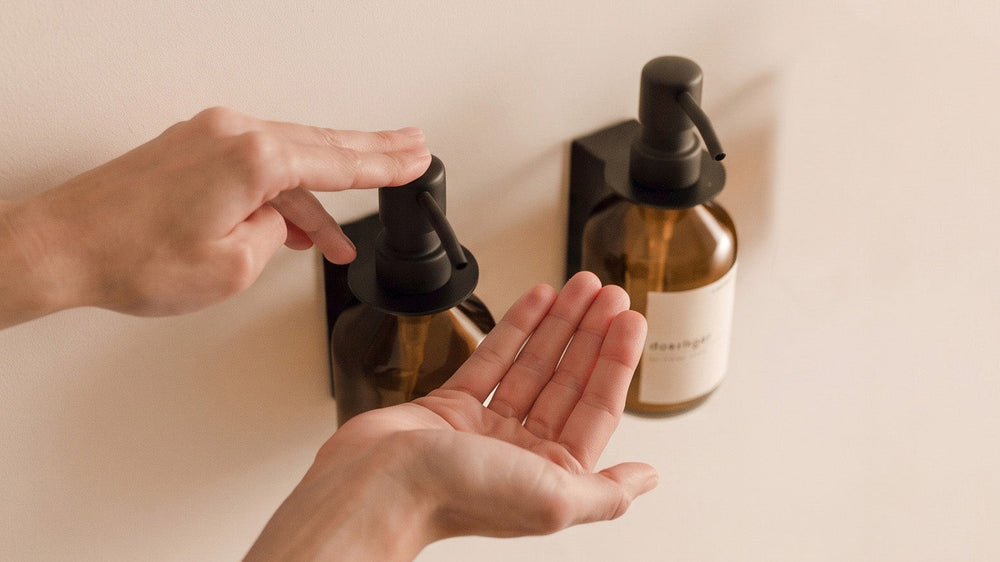
In most cases, the pump is not defective, but clogged. Soap dries in the narrow channel of the pump head and glues it shut from the inside—this happens especially with dispensers that haven't been used for days. Ten minutes in warm water usually solves the problem completely. A pump is only truly broken when the spring inside is snapped, and you can tell by a clear sign.
Why the pump is stuck
Three causes cover almost all cases.
Dried soap. The most common reason. The channel in the pump head is only a few millimeters wide. If a residue remains there, it hardens and blocks the way.
Air in the dip tube. The dispenser pumps easily, but nothing comes out. Typical after refilling or if the bottle was once completely empty.
Limescale. Visible as a white residue at the outlet. Occurs especially in regions with hard water and in dispensers that stand in the bathroom next to the shower.
Too viscous contents is the fourth, rarer case—more on that below.
Opening soap dispensers and cleaning the pump
The pump head on dispensers with standard threads simply screws on. Turn it counterclockwise, then it can be pulled up along with the dip tube. You don't need a tool.
- Unscrew the pump head and pull it out of the bottle.
- Fill a glass with warm water and place the dip tube inside.
- Pump ten to fifteen times until clear water comes out. This flushes the channel from the inside.
- For limescale residue: soak the head for 30 minutes in water with a dash of vinegar or some citric acid, then rinse with clear water.
- Let it drip dry, then screw it back on.
If clear water comes out after step 3, it was dried soap. The dispenser is working again.
Nothing comes out, although the bottle is full
Then there is air in the dip tube. The dispenser is not broken; it just needs to be primed again. Pump quickly and in short intervals five to ten times—not slowly and not just halfway down, otherwise no vacuum will build up.
If still nothing comes out, check the length of the dip tube. If the pump head was transferred from another bottle, the tube might not reach the bottom. It then stands above the liquid level and only draws air.
Why liquid soap foams—or doesn't
A common misunderstanding: Not every pump produces foam. Foam pumps have their own sieve in the head and only work with highly diluted soap. A normal pump dispenses the liquid unchanged.
If you fill a dispenser with a normal pump with viscous soap, it comes out thick or not at all. This is not a defect. Dilute it with water in a ratio of about four parts soap to one part water and shake the bottle once.
When the pump is truly broken
There are two cases in which cleaning no longer helps.
The spring is broken. The head stays down and no longer springs back on its own. This is clear and not repairable.
The plastic head has a crack. Recognizable by the fact that liquid leaks out the side when pumping.
In both cases, you do not need to replace the entire dispenser. Pump heads can be purchased separately, as long as the thread fits. Our stainless steel pump dispenser is made for 28 mm threads and thus fits our 250 ml and 500 ml amber glass bottles. It does not rust, which makes it more durable than a plastic head in the bathroom, and it is available individually as well as in two- and six-packs—practical if there are several dispensers in the kitchen and bathroom.
To be honest: A stainless steel pump head does not prevent drying out. It too must be flushed occasionally. What it prevents is rust and the crack in the plastic.
Refilling correctly so it doesn't happen again
- Rinse out before refilling. Old residues at the bottom of the bottle are the starting point for the next clog.
- Do not fill to the brim. Two centimeters of air below the closure prevents soap from being pressed into the thread when screwing it on.
- Immediately pump through after refilling until liquid comes out. This way, no air remains in the tube.
- Rinse with warm water once a month, even if nothing is stuck. That is the entire maintenance effort.
If you buy soap or dishwashing liquid in large containers and refill them into solid dispensers, you save packaging and have a tidier look on the counter. Our soap dispensers without labels are made for this—without printing, so they work equally well in the kitchen and bathroom.
Frequently asked questions
How do I open a soap dispenser that cannot be unscrewed?
Usually, soap has run into the thread and hardened there. Place the upper part of the bottle in warm water for ten minutes, then the connection will loosen. Turning with force is more likely to snap off the head.
Can I put the pump head in the dishwasher?
Better not. Heat and detergents damage the spring and the seals. Warm water is completely sufficient.
Why does only a little come out when pumping?
Either the channel is partially clogged—then flushing from step 3 helps—or the soap is too viscous for the pump. Neither is a defect.
How often should I clean a soap dispenser?
For daily use, flushing once a month with warm water is sufficient. If the dispenser stands unused for a long time, flush it before the next use.
Does every pump head fit every bottle?
No, the thread size is crucial. 28 mm is common for amber glass bottles, but it is not a standard across all manufacturers. Measure the outer diameter of the bottle neck if in doubt.
You might also be interested in:
- Shower shelf without drilling: What really holds—and what does not
- Wall mount without drilling—for dispensers that should not stand on the shelf
More Home Stories
Shampoo and shower gel dispensers in the shower: what matters when it comes to the pump, holder, and size
Cleaning countertops: What is allowed on which material
Washing kitchen towels: 60 degrees, no fabric softener – and why that’s enough
Wooden Wick Candle Goes Out: What Causes It and What Helps
How to Remove Fish, Onion & Garlic Smells from Your Hands — What Really Works
Silicone or stone drying mat: What really dries beside the sink
Clean stainless steel without scratches and streaks