Cleaning countertops: What is allowed on which material
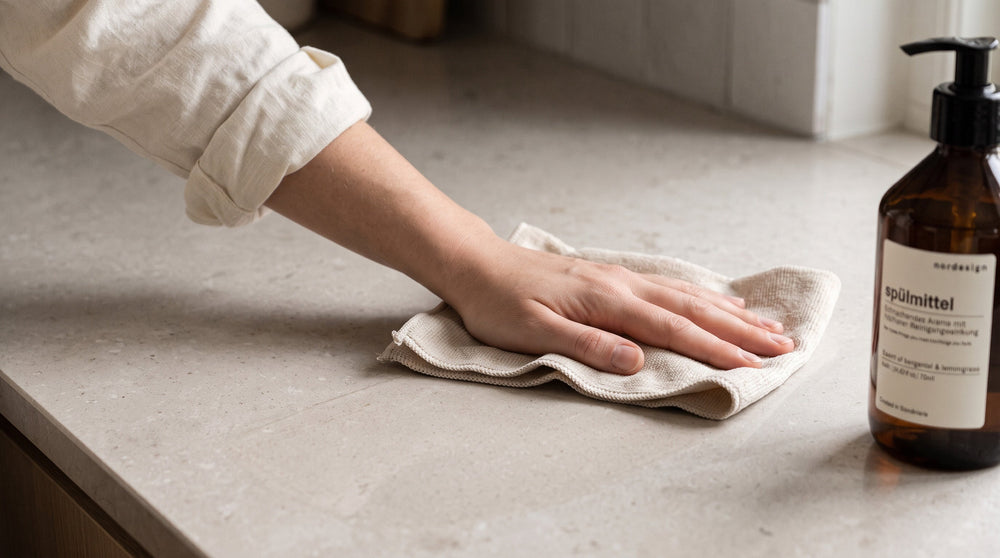
For everyday use, warm water with a drop of dishwashing liquid and a soft cloth is enough for almost any countertop. What matters is not the cleaner, but what you leave out: vinegar and citric acid on natural stone, scouring milk on high-gloss surfaces and plastic, and standing water on wood. These three mistakes cause most of the damage that later looks like normal wear and tear.
Below that, it depends on the material. Here is what each common surface can tolerate and how you can tell if something has gone wrong.
Cleaning granite and natural stone
Granite is hard, but not acid-resistant. The surface is porous and factory-sealed—and it is precisely this sealant that acid breaks down. Vinegar, lemon, descalers, and many bathroom cleaners attack it. The countertop does not look damaged right away. It just picks up stains faster because the protection is missing.
What works: pH-neutral cleaner, soft cloth, dry after wiping. Blot oil and red wine immediately instead of rubbing them in.
When there are limescale rings around the sink, the urge to reach for a descaler is understandable—and wrong. Warm water, patience, and several passes are better. If you wipe dry regularly, you won't have the problem.
Marble and limestone are even more sensitive than granite. There, even an overturned glass of white wine leaves a matte stain because the acid etches the stone. This is not dirt and cannot be removed by cleaning.
Quartz, ceramic, and Dekton
These three are the easiest surfaces to care for in the kitchen. They are not porous, do not absorb liquid, and tolerate normal household cleaners.
The limitation lies elsewhere: quartz contains resin as a binder. It reacts to heat and to aggressive solvents such as acetone or nail polish remover. A hot pot placed directly on the countertop can leave a permanent discoloration. Ceramic and Dekton are more robust; both can withstand high temperatures.
For all three: no scouring powder. They are scratch-resistant against knives, but scouring particles visibly dull the surface over time.
Cleaning a wooden countertop
Wood is the exception. The enemy is not dirt, but standing water. Around the sink and behind the faucet, the wood swells, the surface becomes rough, and then moisture penetrates deeper.
The routine is therefore short: wipe with a damp cloth, immediately dry. Never leave it wet, never soak the wood.
Oiled countertops need additional care. Depending on use, re-oil once or twice a year—you can tell when it is time because water no longer beads up but forms dark spots. Do not oil lacquered countertops; there, simply wipe dry.
What does not work: steam cleaners, dishwasher detergent, scouring milk. All three open up the surface.
Plastic and laminate
Laminate is resistant to acid and most cleaners, but sensitive to anything abrasive. Scouring milk, scouring pads, and metal sponges leave matte streaks that can no longer be removed.
The second weak point is the edges. Where the coating meets the core board, water gets into the joint. This later causes swelling that cannot be reversed. So: always blot water from the edges and around cutouts.
Black and matte surfaces
Dark and matte fronts are not inherently special in terms of material—they are usually laminate, ceramic, or coated stone. Their problem is visual: they show every streak and grease film.
The reason is almost always too much cleaning agent. What is not removed dries into a film and attracts new dust. The solution is less cleaner and a second pass moistened only with clear water. Then wipe dry with a dry cloth.
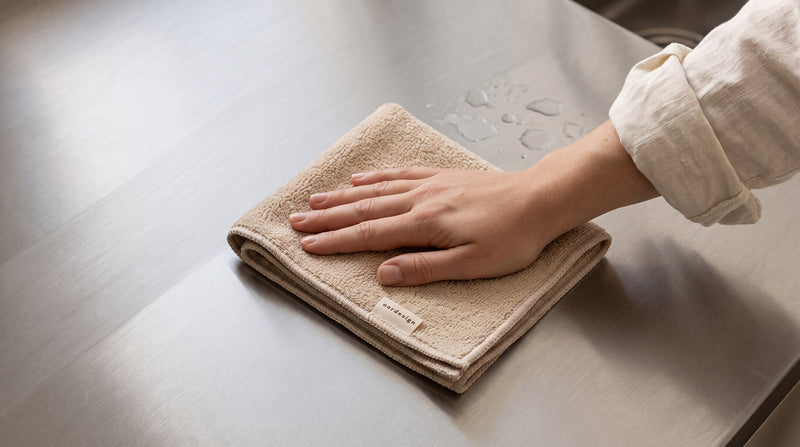
Microfiber absorbs grease better than cotton and works streak-free on smooth surfaces. Our microfiber cloth set is designed exactly for this; a cotton kitchen cloth is better for drying.
Home remedies: what helps, what harms
Vinegar is the most recommended home remedy and the worst for natural stone. It is harmless on laminate and ceramic, but attacks the sealant and stone on granite, marble, and limestone.
Baking soda works because it scours. That is exactly why it does not belong on high-gloss surfaces, plastic, and quartz.
Dishwashing liquid in warm water is a home remedy that works on practically every surface. It dissolves grease, is close to neutral in pH, and can be removed residue-free. That is enough for daily wiping.
If you prefer to have a ready-made product on hand: Our all-purpose cleaner is formulated to be pH-neutral and can therefore also be used on sealed natural stone.
How often is reasonable
Wipe with a damp cloth and dry after every cooking session. It takes less than a minute and replaces most basic cleanings.
Everything that can cause stains—oil, red wine, coffee, lemon, tomato—blot immediately, not later. With porous materials, the time between a drop and blotting determines whether a stain forms at all.
If there is already a stubborn residue, the procedure for this is in our post on stubborn stains on the kitchen surface.
Frequently asked questions
Can I put vinegar on my countertop? Yes, on laminate, ceramic, Dekton, and quartz. No, on granite, marble, limestone, and any other natural stone—the acid breaks down the sealant and can dull the stone.
What is the best way to clean a granite countertop? Warm water with a drop of dishwashing liquid or a pH-neutral cleaner, a soft cloth, wipe dry. No descalers, no scouring agents.
How do I remove limescale from the granite countertop? With warm water and repetition instead of a descaler. As a preventive measure, wipe the area around the sink dry after use—limescale forms where water evaporates.
Can I use dishwashing liquid for the countertop? Yes, that is the safest option for almost all materials. The only thing is to use sparingly and remove the residue with clear water, otherwise a film will remain.
Why is my black countertop streaky after cleaning? Almost always due to cleaning agent residue. A second pass with clear water and subsequent drying solves this.
How do I properly care for a wooden countertop? Wipe with a damp cloth, dry immediately, no standing water. Re-oil oiled countertops once or twice a year as soon as water no longer beads up.
More Home Stories
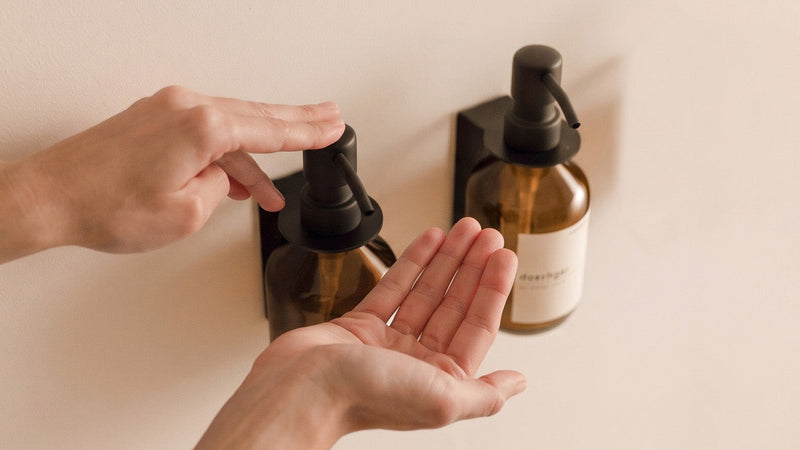
Soap dispenser no longer pumps: What can be repaired – and what cannot
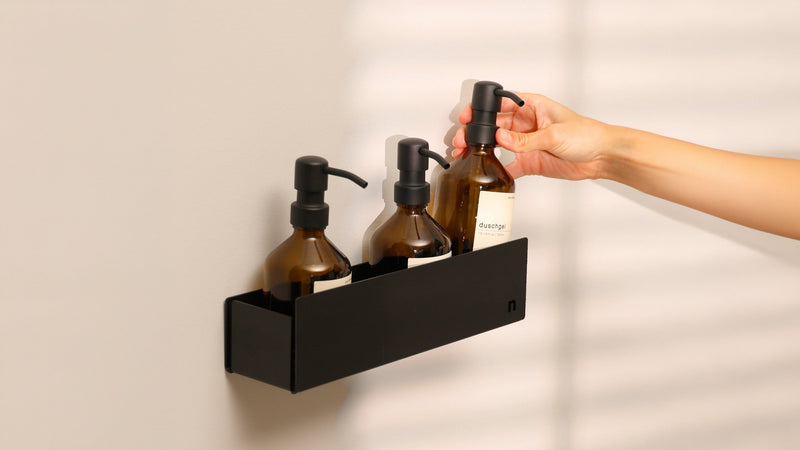
Shampoo and shower gel dispensers in the shower: what matters when it comes to the pump, holder, and size
Washing kitchen towels: 60 degrees, no fabric softener – and why that’s enough
Wooden Wick Candle Goes Out: What Causes It and What Helps
How to Remove Fish, Onion & Garlic Smells from Your Hands — What Really Works
Silicone or stone drying mat: What really dries beside the sink
Clean stainless steel without scratches and streaks