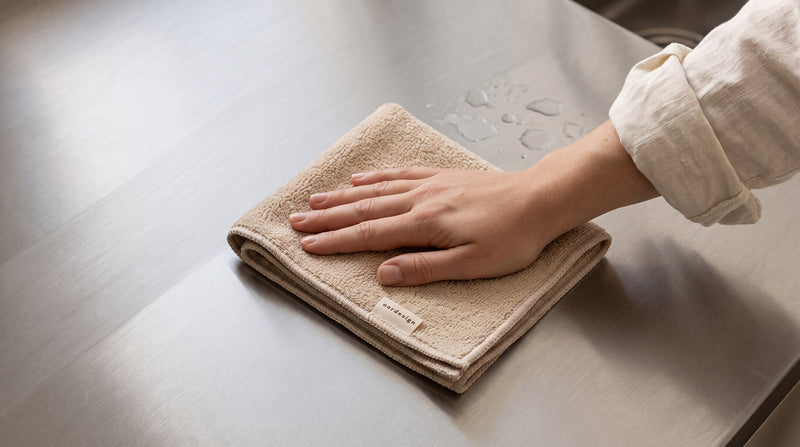
Organizing the bathroom: How to create order in a small bathroom
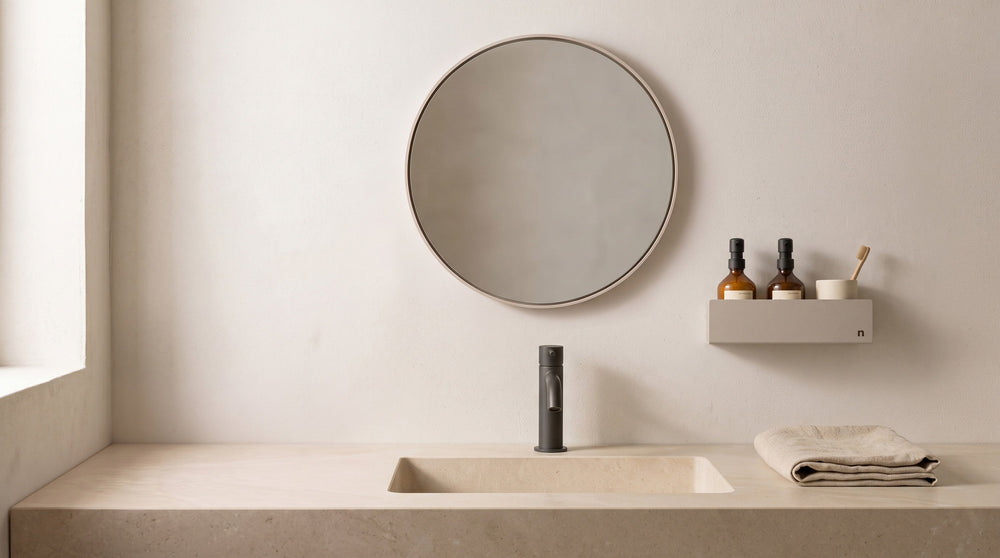
Bathroom organization isn't about having more storage space, but about having fewer things on the surfaces. If you want to organize your bathroom, first clear out everything thoroughly, then group items by use and give every item a permanent place—preferably on the wall instead of on the vanity. Three zones are enough: vanity, shower, supplies. The rest falls into place naturally.
In a small bathroom, every centimeter counts. The good news: You don't need a renovation or a new cabinet. You need a system. Here it is, step by step.
First, empty everything out: What's actually worth keeping?
Before you put anything away, take everything out. Every drawer, every shelf, every tray. Then sort the items into three piles: daily, occasionally, never. Anything no one has touched in the last few months doesn't belong back in the bathroom. Empty packaging, duplicate samples, expired creams—get rid of them.
Group what remains by use, not by product type. Toothbrushes, soap, and towels are used daily and should be within easy reach. Backups can be stored further away.
Zone 1: The vanity—keep the surface clear
The vanity is the most visible surface in the bathroom and the place where clutter accumulates most quickly. The rule is simple: as little as possible should sit directly on the countertop. Anything that can go on the wall should go on the wall.
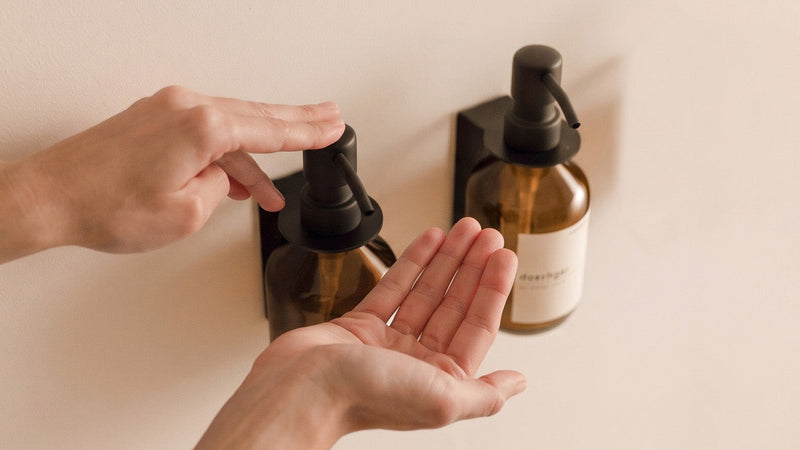
A permanent soap dispenser instead of three opened bottles. A toothbrush holder with room to spare. The rest goes in the top drawer. Our guide Installing a soap dispenser without drilling shows you how to attach a dispenser neatly to the wall without drilling.
A clear vanity not only looks tidier—it can also be cleaned in thirty seconds. That's exactly the point: organization that's easy to maintain lasts longer.
Zone 2: The shower—think vertically
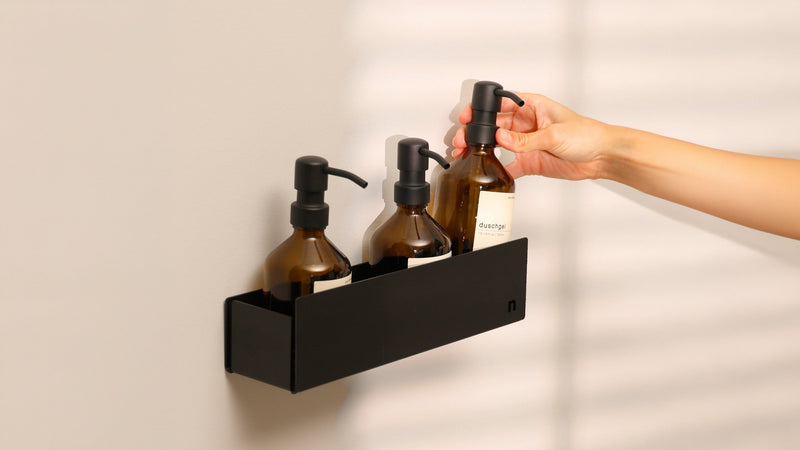
In the shower, bottles usually pile up on the floor or the edge of the tub. Both collect limescale and tip over. The solution is on the wall: a shower shelf brings shampoo, shower gel, and soap onto one level, safely out of the way.
It's important to use a material that can withstand constant moisture. Powder-coated metal doesn't rust, while plastic yellows over time. We honestly tested which shower mountings really hold and which fall off after two weeks: Shower shelf without drilling—what really holds and what doesn't.
Zone 3: Supplies—visible but organized
Cotton pads, spare rolls, refill packs: supplies don't have to be pretty, but they should be organized. Ideally in identical containers instead of original packaging. Open baskets for things you need often. Closed boxes for things that are rarely used and bring order to the cabinet.
A tip for avoiding chaos behind the cabinet door: group items into categories—hair, teeth, cleaning, first aid—and keep one container per category. This way, you can see at a glance what needs to be reordered and avoid buying duplicates.
Organizing a small bathroom: gain surface space without a renovation
In a small bathroom, the wall is your most important reserve. What hangs doesn't block any surface and makes the room look larger. Three things work immediately:
- Up instead of wide: Shelves and holders above head height use space that would otherwise remain empty.
- Utilize the inside of doors: The inside of the cabinet door holds brushes, hair dryers, or small baskets.
- Uniform containers: Identical boxes look calmer than colorful packaging—this makes even a full shelf look tidy.
You don't need to drill anything for this. Modern holders with adhesive anchors hold reliably on tiles as long as the surface is clean and dry.
Organization that lasts: three habits
A tidy bathroom isn't a state, but a routine. Three small habits keep the system stable:
- One quick check when leaving: Anything left out goes back to its place. Ten seconds is enough.
- Keep one surface clear: The vanity is off-limits for permanent residents. Anything that ends up there has another place.
- One in, one out: Bought a new bottle? Dispose of the empty one right away. This prevents your stock from growing unnoticed.
Checklist: Organize the bathroom in 30 minutes
- Empty everything out and sort into daily / occasionally / never
- Dispose of the "never" pile, check for expired items
- Clear the vanity, attach dispensers to the wall
- Declutter the shower, install a shelf
- Organize supplies in identical containers by category
- Use wall and door surfaces for rarely used items
- Finally: wipe down once
Frequently Asked Questions
How do I organize a small bathroom without additional storage space?
By using the wall instead of the surface. Holders, shelves, and baskets on the wall and the inside of the door create space without adding a piece of furniture. Fewer items on the vanity also immediately make it look larger.
Bathroom storage—open baskets or closed boxes?
Both, depending on use. Open baskets for daily items that need to be quickly accessible. Closed boxes for supplies and rarely used items that create a calmer look.
Do I need to drill for bathroom holders?
No. Good holders with adhesive anchors also hold on tiles if the surface is clean and dry. For more details, see our guides on shower shelves and soap dispensers without drilling.
What material is suitable for a damp bathroom?
Powder-coated metal is resistant to constant moisture and does not rust. Plastic is cheaper, but yellows and shows limescale more quickly.
Over 450,000 people use our products daily. If you want to set up your bathroom step by step, you can find our bathroom solutions here in our range.
More Home Stories
Soap dispenser no longer pumps: What can be repaired – and what cannot
Shampoo and shower gel dispensers in the shower: what matters when it comes to the pump, holder, and size
Cleaning countertops: What is allowed on which material
Washing kitchen towels: 60 degrees, no fabric softener – and why that’s enough
Wooden Wick Candle Goes Out: What Causes It and What Helps
How to Remove Fish, Onion & Garlic Smells from Your Hands — What Really Works
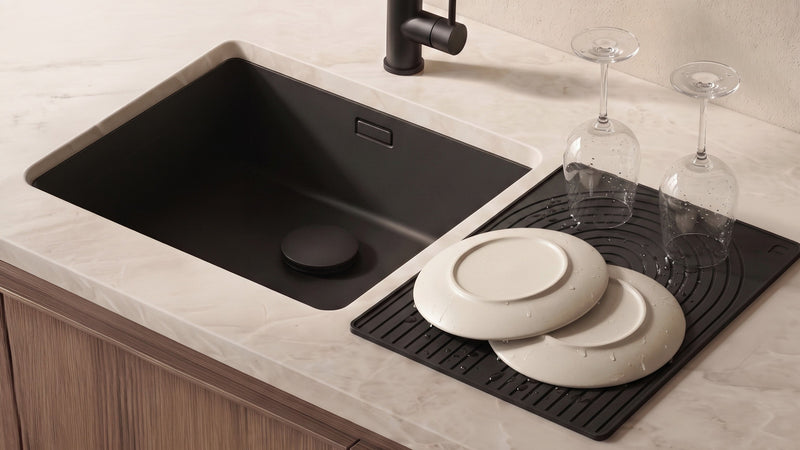
Silicone or stone drying mat: What really dries beside the sink