How to Remove Fish, Onion & Garlic Smells from Your Hands — What Really Works
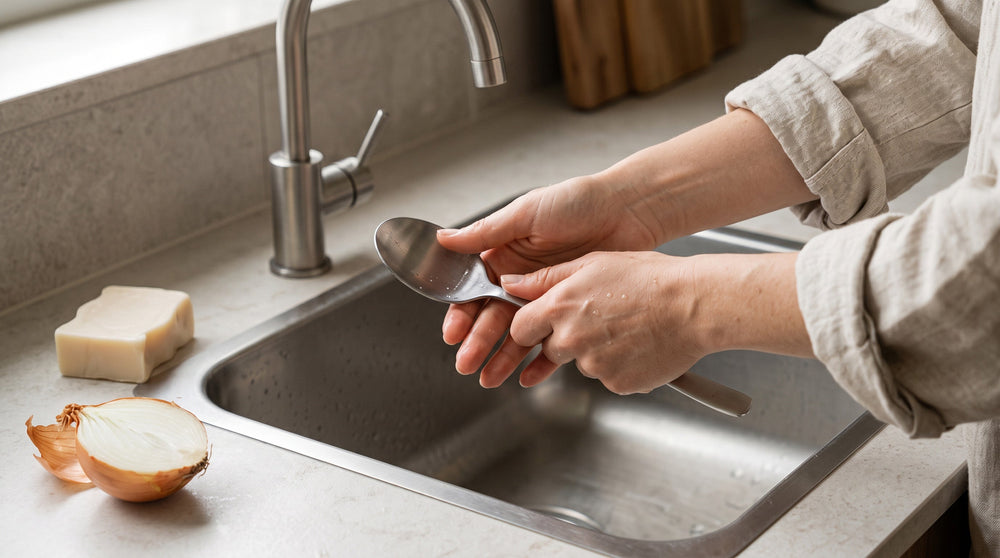
Fishy smells, onion and garlic disappear fastest when you rub your hands on something stainless steel – on the sink or on a spoon – and then wash them with soap. Stainless steel binds the sulfur compounds that soap alone often cannot dissolve. Lemon, salt and coffee grounds also help. What really works, what only seems to work and what you’d better leave alone – here they are in order.
Why some smells are so persistent
Onions, garlic and fish contain sulfur-based molecules. When cut, they stick to the skin and combine with the natural oils on your fingers. Soap dissolves fat – but only partially dissolves these sulfur compounds. That’s why the smell often lingers, even though you’ve washed your hands thoroughly. It’s not you. It’s the chemistry behind it.
The stainless steel trick: the most effective home remedy
Stainless steel binds the sulfur compounds and neutralizes the smell. And you don’t need a special product for it.
Here’s how:
- Hold your hands under cold running water.
- Rub them on a stainless steel surface for about 30 seconds – your sink, a spoon or the back of a knife.
- Then wash with soap and dry.
Honestly: The trick works reliably for fish, onion and garlic smells. For smells that are not based on sulfur, it helps less – more on that below.
Lemon, salt and coffee grounds – the kitchen classics
If no stainless steel is handy, three things you already have at home can help:
- Lemon: The acid covers and breaks down the smell. Rub half a lemon over your hands, let it work briefly, then rinse. Downside: Citric acid dries out the skin – apply cream afterwards.
- Salt: A spoonful of salt mixed with a little water to form a paste works like a gentle scrub and removes the layer that causes the smell.
- Coffee grounds: Coffee binds smells. Rub damp coffee grounds between your hands, then rinse – it works surprisingly well, but leaves a dark stain for a short time.
Chlorine and gasoline smells: it’s different here
Smells of swimming pool chlorine or gasoline are not sulfur compounds. The stainless steel trick does little here. What helps: wash thoroughly with lukewarm water and an oil-based soap, then apply hand cream. Solvent smells need one thing above all – a little time and air. We deliberately do not promise you a miracle cure here, because there isn’t one.
What you wash with afterwards makes the difference
No matter which home remedy you use – the final step is always soap. And it should thoroughly dissolve the film of oil without drying out your skin. That’s exactly what we designed our hand soap for: natural cleaning power, nourishing ingredients, and a subtle scent that does not cover, but neutralizes.
Over 450,000 people now use our products every day. If you often cook with fish, onions or garlic, a good hand soap at the sink is the easiest lever.
Prevention: don’t let smells get on your hands in the first place
It’s most pleasant when the smell never gets on your hands at all:
- Use a cutting board and knife instead of your fingers when cutting – keep direct contact to a minimum.
- Thin kitchen gloves are worth it for raw fish.
- Rub your hands on the stainless steel sink immediately after cutting, before the smell sets in.
Frequently asked questions
How can I get fish smell off my hands as quickly as possible?
Stainless steel under cold water for around 30 seconds, then wash with soap. That’s the fastest and most reliable method.
Does stainless steel really help against onion and garlic smells?
Yes. Stainless steel binds the sulfur compounds from onions and garlic – the effect is real and well documented in practice.
What can I do about chlorine smell on my hands after the swimming pool?
Wash thoroughly with lukewarm water and oil-based soap, then apply cream. Chlorine smell is more persistent than kitchen smells and disappears mainly with a little time.
Does toothpaste help against smells on the hands?
Toothpaste can help in the short term because it is mildly abrasive and covers the smell. But it dries out the skin – lemon, salt or the stainless steel trick are better choices.
More on the topic: The little ABCs of kitchen cleaning and our universal cleaner for surfaces.
More Home Stories
Soap dispenser no longer pumps: What can be repaired – and what cannot
Shampoo and shower gel dispensers in the shower: what matters when it comes to the pump, holder, and size
Cleaning countertops: What is allowed on which material
Washing kitchen towels: 60 degrees, no fabric softener – and why that’s enough
Wooden Wick Candle Goes Out: What Causes It and What Helps
Silicone or stone drying mat: What really dries beside the sink
Clean stainless steel without scratches and streaks