Organizing a Small Kitchen: What Goes Where—and What Works Without Drawers
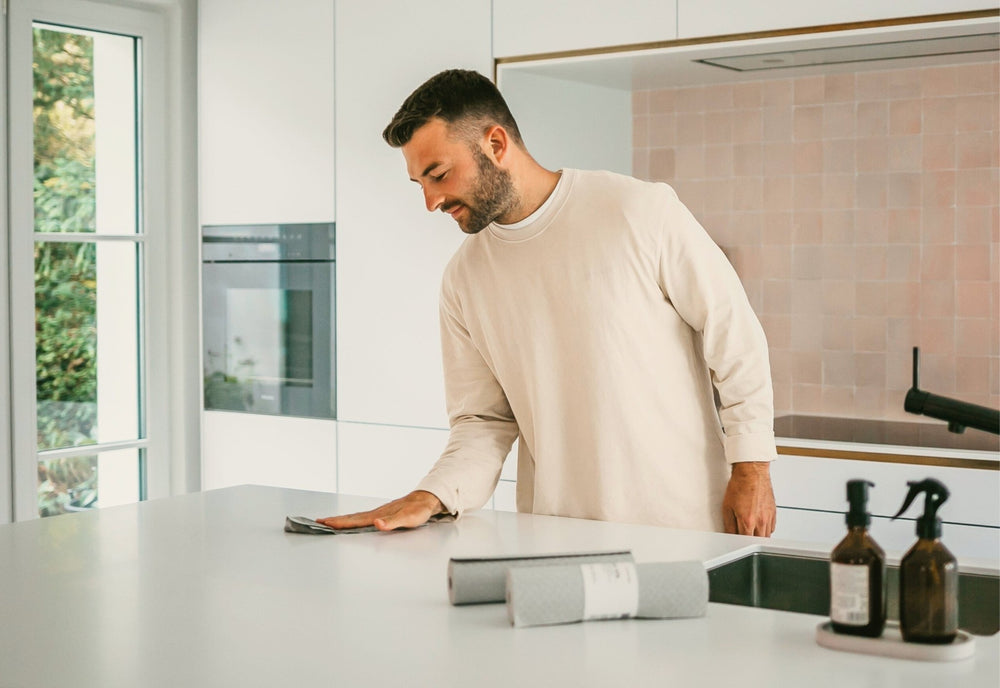
A small kitchen is not made tidy by more storage space, but by having fewer things in fixed places. Divide the kitchen into three zones – pantry, cooking, washing up – and put each item where you use it. Anything you need less than once a week goes up, to the back, or out of the kitchen.
That sounds simple. It is the reason why some small kitchens look calm and some large ones do not.
Maintaining order in the small kitchen: first reduce, then organize
Anyone who buys boxes first is just sorting clutter into containers. A better start is one empty cabinet at a time.
- Empty a cabinet or compartment completely.
- Assign each item to one of three groups: daily, weekly, rarely.
- Sort out duplicates. Three whisks, four spatulas, twelve storage containers without lids – in small kitchens, that is exactly what eats up the space.
- Only then put them back, according to the three zones from the section "Order system for the small kitchen: three zones".
One compartment per evening is enough. In a week, the kitchen is done once.
Order system for the small kitchen: three zones
An order system does not have to consist of containers. It is a rule that you do not have to rethink every time. The simplest rule: Everything is where it is first used.
- Pantry zone: Food, spices, oil. Near the refrigerator or the work surface where you cut.
- Cooking zone: Pots, pans, cooking spoons, oven mitts. Directly at the stove.
- Washing-up zone: Dishwashing liquid, sponges, cloths, trash. At the sink and underneath.
The smaller the kitchen, the more the zones overlap. That is okay. The only thing that matters is that each item has exactly one place.
Organizing the kitchen: What belongs where
Eye- to hip-height is the most valuable space. This is where you reach for things daily: plates, glasses, cups, cooking spoons, the pan you always take.
Above are things you need weekly or less often: baking dishes, storage jars for refills, the large salad bowl.
Below go heavy things: pots, water bottles, kitchen machine. Under the sink: cleaning supplies and trash, nothing to eat.
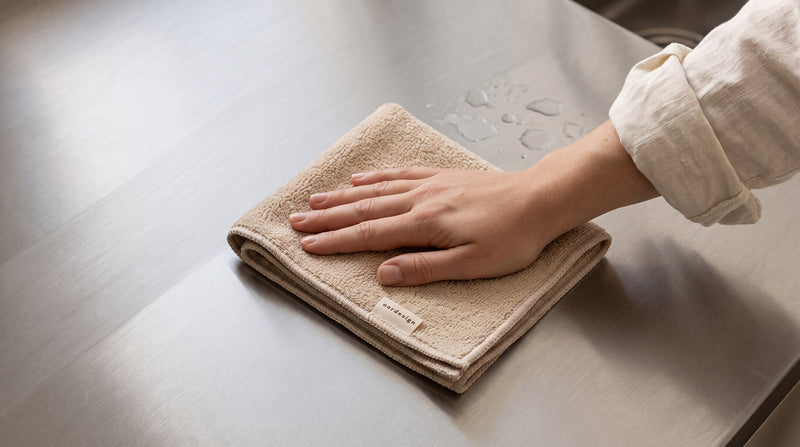
On the work surface stands only what is used daily. In a small kitchen, the free surface is the real luxury. Every appliance that just stands there costs you workspace every day.
Organizing the kitchen without drawers
Many small kitchens, especially in rental apartments, have hardly any drawers. Then the wall and cabinet door take over their task.
- Wall instead of surface: A rail with hooks above the work surface holds cooking spoons, ladles, and whisks. What hangs does not lie around.
- Use the cabinet door: On the inside, a narrow rail holds oven mitts, lids, or spice bags.
- Baskets as drawer replacements: A flat basket in the lower cabinet can be pulled out like a drawer. This way you can also reach things in the back row.
- Stick instead of drilling: Anyone who is not allowed to drill in a rental apartment can attach holders with special adhesive to smooth surfaces like tiles, glass, or metal. On wallpaper, rough plaster, and loose plaster they do not hold.
Drawers and boxes: when they help, when they do not
Drawers quickly become collection points. A divider with compartments helps if each compartment has a fixed purpose: cutlery, cooking utensils, knives, small items. A drawer "for everything" is not order, but a hiding place.
Boxes are worth it for things that belong together and are used together – baking ingredients, tea varieties, breakfast spreads. For individual items they are rather an extra step: first take out the box, then search, then put the box back. A few identical boxes look calmer than many different ones, and transparent ones show what is inside.
The sink: the area that tips over the fastest
In small kitchens, the edge of the sink is often the only shelf. There stand dishwashing liquid, soap, sponge, and brush – wet, scattered, and visible every day.
An organizer bundles this onto one surface. Our Sink Organizer is 26 cm long and 7.7 cm deep and holds dishwashing liquid, hand soap, and sponges. The drip tray lets water drip off wet sponges, the handle serves as a holder for the dishcloth. It is made of stainless steel and stands on soft pads so that nothing gets scratched.
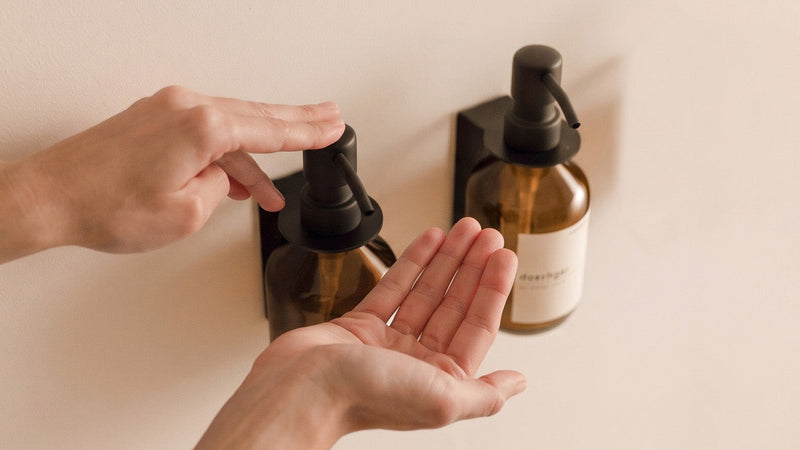
If the edge is too narrow, go one level higher: With a Wall mount without drilling, the soap dispenser hangs on the tile instead of on the work surface. The holder is glued and can be removed residue-free if needed.
The same applies to the kitchen roll: Whether it stands or hangs better depends on the space. We have summarized the comparison in Kitchen roll holder standing vs. wall-mounted.
This is how it stays tidy: five minutes in the evening
Order in a small kitchen is not maintained by the system alone, but by a short routine.
- Completely clear the work surface in the evening and wipe it down.
- If something is not in its place, put it back immediately.
- Empty the sink, squeeze out the sponge, hang up the cloth to dry.
Five minutes are enough. The effect the next morning is greater than you think.
Frequently asked questions
How do I keep order in a small kitchen?
With few things in fixed places and a free work surface. Divide the kitchen into pantry, cooking, and washing-up zones and tidy up for five minutes in the evening.
What belongs where in a kitchen?
Daily things at eye- to hip-height, rare things above, heavy things below, cleaning supplies under the sink. Only what you use every day on the work surface.
How do I organize a kitchen without drawers?
Via the wall and cabinet door: hook rails for cooking utensils, rails on the inside of the door, flat baskets in the lower cabinet as drawer replacements. Where you are not allowed to drill, adhesive solutions on tiles, glass, or metal help.
Are boxes worth it for organizing the kitchen?
For things that are used together, yes. For individual items rather not – they make access more cumbersome.
Which ideas help the most in a very small kitchen?
Keep the work surface free, use the wall, and bundle the washing area. These three steps bring back the most surface in small kitchens.
More Home Stories
Soap dispenser no longer pumps: What can be repaired – and what cannot
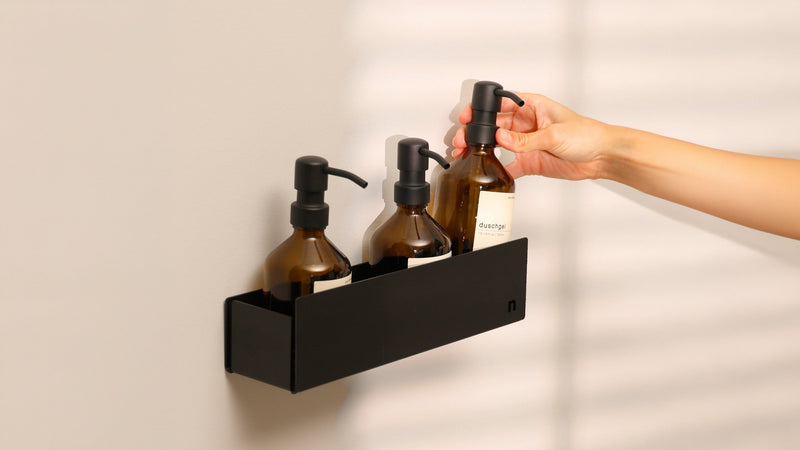
Shampoo and shower gel dispensers in the shower: what matters when it comes to the pump, holder, and size
Cleaning countertops: What is allowed on which material
Washing kitchen towels: 60 degrees, no fabric softener – and why that’s enough
Wooden Wick Candle Goes Out: What Causes It and What Helps
How to Remove Fish, Onion & Garlic Smells from Your Hands — What Really Works
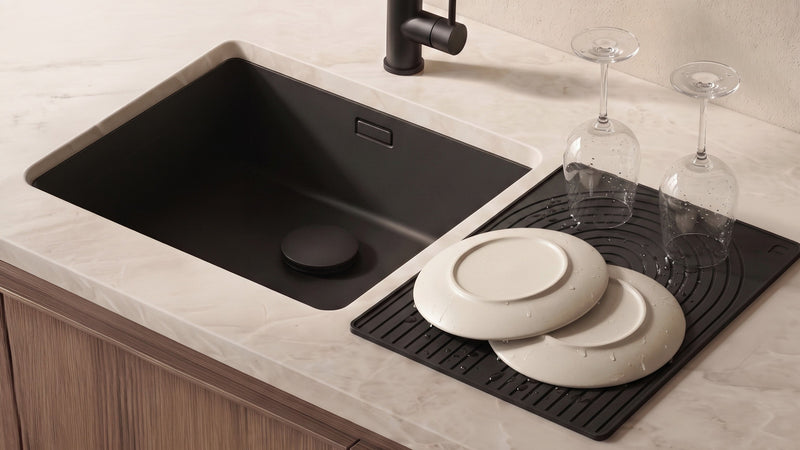
Silicone or stone drying mat: What really dries beside the sink